
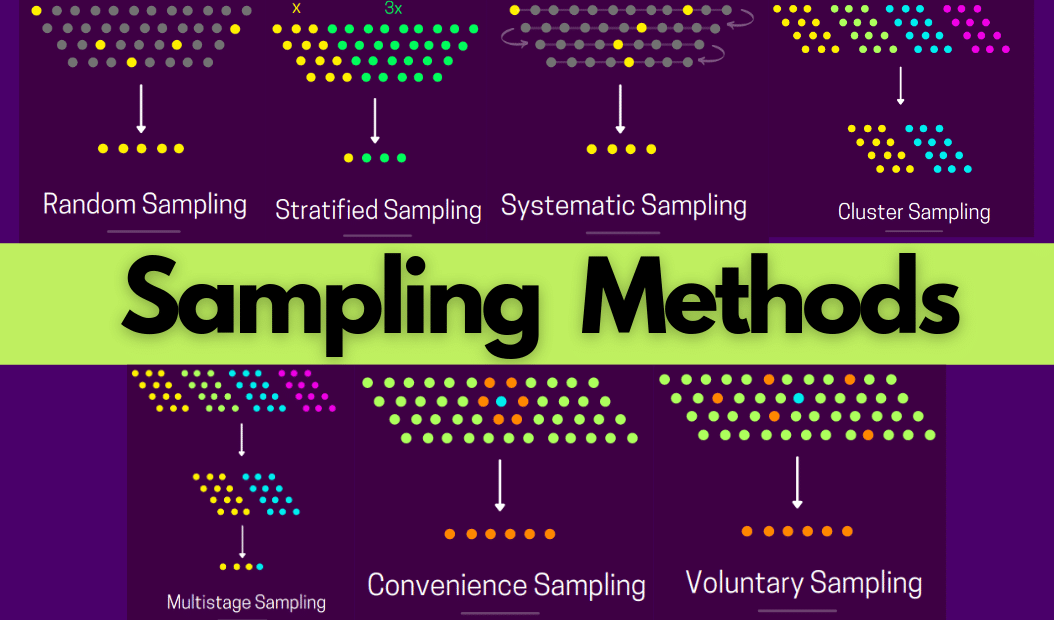
Working with an entire population dataset is often computationally expensive, slow, or downright impossible. Whether you are analyzing terabytes of streaming web logs, conducting user surveys, or balancing an imbalanced machine learning dataset, sampling is essential.
Sampling is the process of selecting a representative subset of data points from a larger population to make statistical inferences and train machine learning models efficiently.
However, choosing the wrong sampling strategy can introduce severe sampling bias, rendering your model predictions inaccurate when deployed to real-world production environments.
Here is a guide to the primary sampling techniques used in data science and when to apply each.
The Master Sampling Classification
Sampling methods broadly fall into two core categories: Probability Sampling and Non-Probability Sampling.
                           ┌──────────────────────────┐
                           │   Sampling Techniques    │
                           └─────────────┬────────────┘
                                         │
                 ┌───────────────────────┴───────────────────────┐
                 ▼                                               ▼
    ┌──────────────────────────┐                    ┌──────────────────────────┐
    │   Probability Sampling   │                    │ Non-Probability Sampling │
    │  (Random, Unbiased Selection)                 │  (Non-Random Selection)  │
    └────────────┬─────────────┘                    └────────────┬─────────────┘
                 │                                               │
  ┌──────────────┼──────────────┬──────────────┐         ┌───────┴───────┐
  ▼              ▼              ▼              ▼         ▼               ▼
Simple        Systematic   Stratified       Cluster   Convenience    Purposive /
Random                                                / Quota        Convenience
1. Probability Sampling Techniques
In probability sampling, every data point in the population has a known, non-zero chance of being selected. This ensures statistical objectivity and minimizes selection bias.
A. Simple Random Sampling
Every sample in the population has an equal probability of selection.
-
How it works: Randomly pick $n$ rows from a dataset of size $N$ using a random number generator.
-
When to use: When the dataset is relatively homogeneous and has no severe class imbalances.
-
Python Example:Python
# Randomly sample 20% of rows from a DataFrame
df_sample = df.sample(frac=0.20, random_state=42)
B. Stratified Random Sampling
The population is divided into non-overlapping subgroups (strata) based on a specific attribute (e.g., age, gender, credit rating). Random samples are then drawn from each stratum in proportion to their size in the overall population.
Population (60% Blue, 40% Red) ──► Stratify ──► Sample (60% Blue, 40% Red)
-
When to use: Crucial when dealing with imbalanced target classes (e.g., fraud detection where only $1\%$ of transactions are fraudulent) or underrepresented demographics.
-
Python Example:Python
from sklearn.model_selection import train_test_split

# Preserve target class ratios during train-test split
X_train, X_test, y_train, y_test = train_test_split(
    X, y, test_size=0.2, stratify=y, random_state=42
)
C. Systematic Sampling
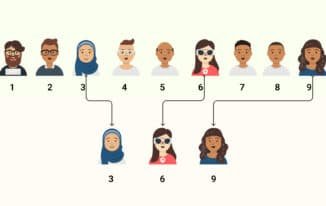
Elements are selected at regular, fixed intervals ($k$) from an ordered frame, where $k = \frac{N}{n}$.
-
How it works: Select every $k$-th record after a random starting index.
-
When to use: Streaming data, time-series logs, or production sensor feeds where continuous random generation is inefficient.
-
Warning: Avoid if the data has a repeating, cyclic pattern (periodicity) that aligns with interval $k$.
D. Cluster Sampling
The population is divided into naturally occurring clusters (e.g., geographic regions, schools, stores). Instead of sampling individuals, whole clusters are randomly selected, and all or a sample of individuals within those clusters are analyzed.
-
When to use: When data is geographically dispersed or when collecting individual data points incurs high operational costs.
2. Special Machine Learning Sampling Techniques
Machine learning presents unique sampling challenges—particularly class imbalance and model validation.
                   Class Imbalance Handling
                             │
            ┌────────────────┴────────────────┐
            ▼                                 ▼
   ┌──────────────────┐              ┌──────────────────┐
   │  Undersampling   │              │   Oversampling   │
   │ (Drop majority)  │              │ (Synthesize minor)│
   └──────────────────┘              └──────────────────┘
A. Handling Class Imbalance (Resampling)
-
Random Undersampling: Downsamples the majority class to match the minority class. Risk: Loses valuable information.
-
Random Oversampling: Duplicates minority class samples. Risk: Leads to overfitting.
-
SMOTE (Synthetic Minority Over-sampling Technique): Synthesizes new minority instances along the line segments connecting existing $k$-nearest neighbors rather than duplicating rows.
B. Cross-Validation Sampling Strategies
To evaluate model performance reliably without data leakage:
-
$K$-Fold Cross Validation: Splits data into $K$ equal subsets; iterates $K$ times, training on $K-1$ folds and testing on the remaining fold.
-
Stratified $K$-Fold: Ensures each fold maintains the same percentage of target class labels as the complete dataset.
-
Time-Series Split (Rolling Window): Respects chronological order—trains on past data and tests on future data to avoid temporal data leakage.
Summary Matrix: When to Use Which Sampling Technique
| Technique | Primary Use Case | Key Advantage | Main Risk / Limitation |
| Simple Random | General baseline datasets | Easy to implement; unbiased | Performs poorly on rare/imbalanced classes |
| Stratified | Imbalanced target variables (Classification) | Guarantees representation across key groups | Requires knowing category labels in advance |
| Systematic | Time-series, IoT stream data | Computationally lightweight for streams | Susceptible to cyclical pattern bias |
| Cluster | Distributed / Geographic datasets | Cost-effective for large-scale operations | Higher sampling error if clusters aren’t uniform |
| SMOTE | Highly imbalanced ML datasets | Increases minority signal without duplication | Can create noisy synthetic points in overlap zones |
| Time-Series Split | Sequential / Financial / Weather data | Prevents data leakage from future to past | Smaller initial training size |
Key Takeaway
Sampling is not just a preprocessing step; it fundamentally dictates your model’s ability to generalize. For general data analysis, default to Stratified Sampling whenever target groups matter. For time-dependent problems, strictly enforce Chronological/Time-Series Sampling to prevent target leakage.